

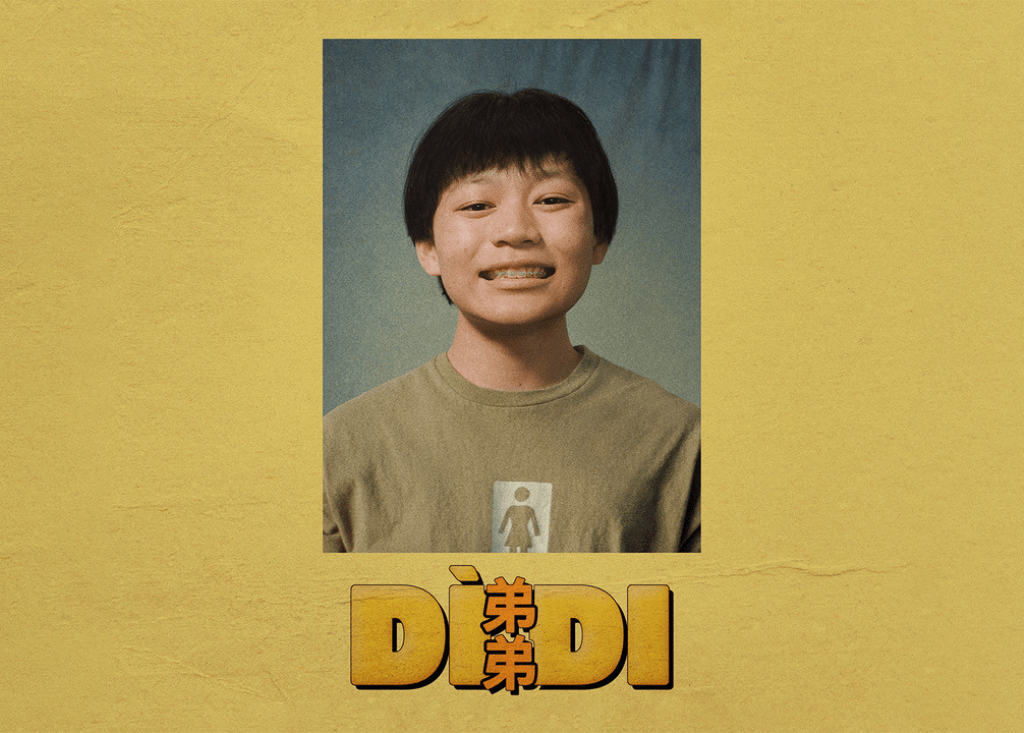
With thanks to MilkTea Films and Juniper by the Sea for the invite to this exclusive community screening of Dìdi by Sean Wang at HOME.
It may be 2024, when great Asian representation is on the rise, but let’s go back to the late 2000s, when MySpace was at its peak before being taken over by the rising popularity of Facebook. This is when the directorial debut film of Sean Wang’s Dìdi is set, giving people who grew up as teenagers during this time all the nostalgic feels as it follows Christopher Wang in his transitional period before high school, his struggles to fit in with different people and his turbulent family relationships as he becomes increasingly unruly.
Wang, who is best known for his Oscar-nominated short film Nǎi Nai & Wài Pó, continues to encapsulate real-life relatable experiences in this emotional coming of age comedy drama and proves his worth as an upcoming filmmaker who is deserving of the awards and praise. Dìdi is reflective of the lives of many second generation Asian immigrants who are coddled, tiger parented or used as mahjong tiles in a game of pride and saving face with fellow Asians. It’s reflective of those of us who hid behind or tried new identities to please others or maintain a particular positive perception of us. It’s also reflective of those of us who have been called “cute for an Asian” but didn’t challenge it. But above all, it’s reflective of those of us who – no matter our ethnicity – grew up posting stupid statuses on Facebook feeling lost, lonely, stifled or rebellious.
What made Dìdi such a heartwarming and even at times heart-wrenching watch, was the stellar cast whose characters’ dynamics were so human, intertwined and meandering. Izaac Wang portrays Chris, a.k.a. Wang Wang, a.k.a. Dìdi, nailing the myriad of emotions and personalities – from shyness and regret to anger and defiance – that is required as the teen navigates his way through friendships, girls, interests and family.
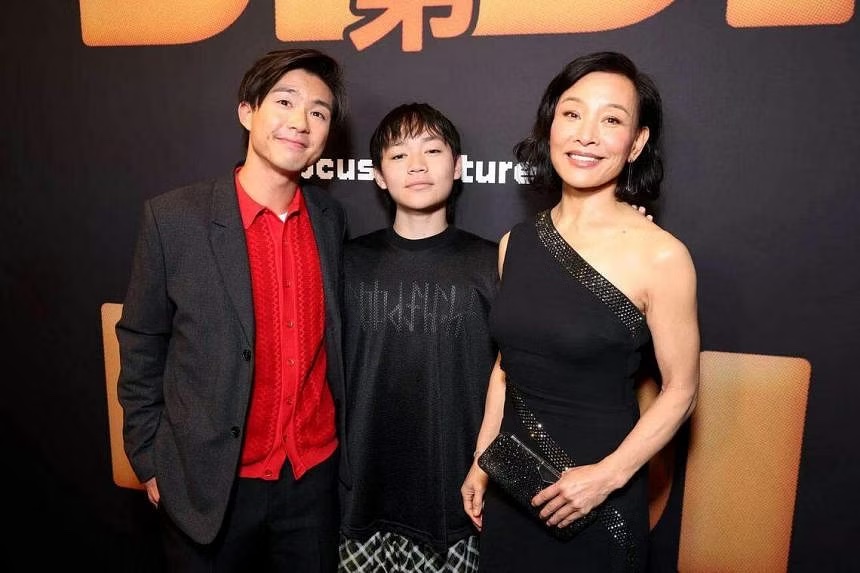
Shirley Chen and Chang Li Hua as his sister Vivian and Nai Nai add to Chris’ dysfunctional family, with Vivian in particular reminding those of us with older siblings how growing up together is full of both public hate and hidden love, while Nai Nai provides comic relief with her hilarious yet absolutely not far from the true attitude of the older generation of Asian immigrants. In addition, the legendary Joan Chen as Dìdi and Vivian’s aspiring artist mother makes us really relate to having parents that just don’t get their Western-born children, seem to more often than not be at their wits end with us, yet still unconditionally love us and show it through their actions.
What struck me as great about the representation Dìdi strives to pertain is that while it is perhaps not a necessarily unique experience from an ESEA perspective and could be that of other ethnic minorities, the fact that it is told from Chris’ view gives a story by people like us a platform that we rarely get to showcase. On the flip side, Chris’ friends Fahad, “Soup” and Hardeep are all also from Asian American backgrounds, which then goes back to what I previously mentioned about this being potentially reflective of anyone regardless of their race and heritage. Who knows how these boys may have also struggled to fit in or be accepted like Chris? Were they too experiencing similar issues and identity crises? Or were they simply more naturally confident and extroverted, which he seemed to not be?
Dìdi hits cinemas on 2nd August and while it has already won the Audience Award: U.S. Dramatic and U.S. Dramatic Special Jury Award: Ensemble at the 2024 Sundance Film Festival, I can imagine that’s only the beginning of its string of accolades. Sadly though, as with many Asian-centric films, including many I have reviewed in the past such as Past Lives, Joy Ride, Raging Grace, Broker, and more, its limited release means a wider and more general audience beyond ESEA and ESEA ally people and communities will not only miss out on this gem but further similar ones will rarely be given their due as well.
 Tan's Topics
Leave a comment